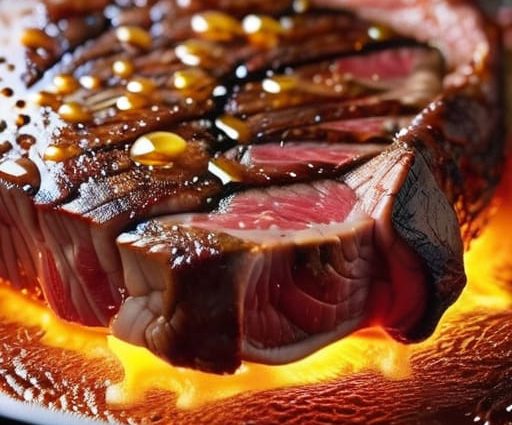
I still remember standing in my grandmother’s kitchen, watching her sear a steak with nothing but a heavy cast-iron skillet and a lifetime of intuition. There were no digital thermometers or complex spreadsheets on the counter, yet she mastered the Maillard Reaction Kinetics better than any textbook-wielding chef I’ve ever met. She didn’t care about the academic jargon; she cared about that specific, intoxicating scent of browning proteins that signals a meal is actually going to be worth the wait.
Look, I’m not here to drown you in a sea of dry, academic formulas that make your eyes glaze over. Most culinary science blogs treat this like a high school chemistry lecture, but we’re going to treat it like what it actually is: the secret language of flavor. I’m going to strip away the fluff and show you how to actually manipulate heat and time to get those deep, savory notes every single time. This isn’t about memorizing equations; it’s about mastering the craft through real-world application.
Table of Contents
The Arrhenius Equation in Food Chemistry
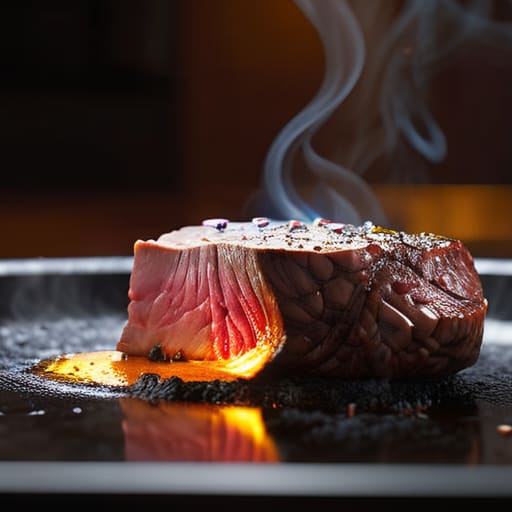
If you want to move past the “magic” of browning and actually predict it, you have to look at the math. This is where we step away from the skillet and into the realm of physical chemistry. At its heart, the Arrhenius equation in food chemistry acts as our roadmap. It tells us exactly how much a tiny nudge in temperature will accelerate the chemical chaos happening between amino acids and reducing sugars. It’s not a linear climb; it’s an exponential surge.
The real trick is understanding the activation energy of browning reactions. Think of this energy as a massive hurdle that the molecules must clear before they can start transforming. If your cooking temperature is too low, the molecules simply don’t have the “oomph” to jump that gap, leaving your food looking pale and uninspired. However, once you hit that sweet spot, the reaction rate doesn’t just increase—it explodes. Mastering this balance is what separates a mediocre sear from a professional-grade crust, allowing you to control the speed of flavor development with surgical precision.
Mastering Activation Energy of Browning Reactions
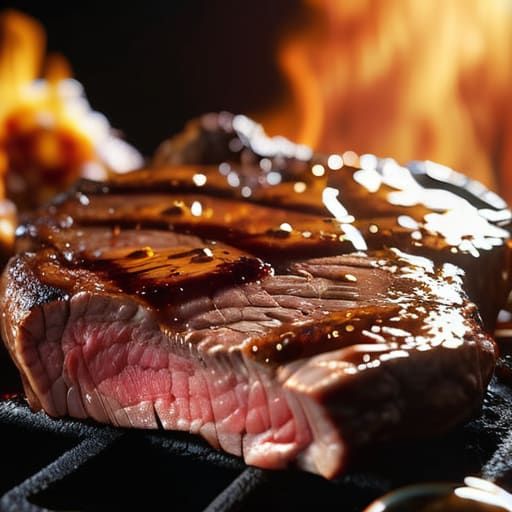
If you’ve ever wondered why a quick sear on a steak looks fundamentally different from a slow-roasted chicken, you’re actually witnessing the tug-of-war of activation energy of browning reactions. Think of activation energy as a metaphorical hurdle that your amino acids and sugars have to leap over before they can transform. If your pan isn’t hot enough, the molecules simply don’t have the kinetic energy to clear that gap, leaving your food looking pale and unappetizing.
However, there is a fine line between a golden crust and a bitter mess. When you push the temperature too high, you aren’t just speeding up the good stuff; you risk accelerating the thermal degradation of carbohydrates. This is where the chemistry gets tricky. If you provide too much energy too quickly, you bypass the nuanced, flavorful stages of melanoidin formation rates and head straight into carbonization. Mastering this process means learning how to manipulate your heat source to provide just enough energy to clear the hurdle without sending the entire reaction into a chaotic, burnt meltdown.
Pro-Level Hacks for Controlling the Browning Curve
- Don’t fear the dry spell. Moisture is the enemy of kinetic speed; if your surface is soaked, you’re stuck in a temperature plateau of 100°C, stalling the reaction before it even starts.
- Play with your pH levels to cheat the clock. Dropping a pinch of baking soda into your sear doesn’t just change the color—it lowers the activation energy barrier, making the browning happen much faster.
- Think in terms of heat flux, not just temperature. It’s not just about how hot the pan is, but how efficiently that energy transfers into the food to keep the reaction moving at a steady, predictable pace.
- Manage your surface area like a pro. The more contact points you have between the food and the heat source, the more “reaction sites” you create, leading to a more complex and intense flavor profile.
- Watch the clock, but trust your eyes. Because Maillard kinetics are exponential, the jump from “perfectly golden” to “burnt carbon” happens in a heartbeat—stay ready to pull your food off the heat.
The Bottom Line for Your Kitchen
Stop treating heat like a blunt instrument; understanding the Arrhenius equation means you can manipulate temperature to control the speed of browning without burning the surface.
Mastering activation energy is the secret to consistency—once you know the threshold your ingredients need to cross, you can replicate that perfect crust every single time.
Flavor is a kinetic game, where the precise balance of time and thermal energy dictates whether you get a subtle golden hue or a complex, deeply savory masterpiece.
## The Heart of the Sear
“We aren’t just applying heat to meat; we are managing a high-stakes chemical race where the difference between a golden crust and a bitter char is measured in a few degrees and a few seconds of kinetic precision.”
Writer
The Final Sear
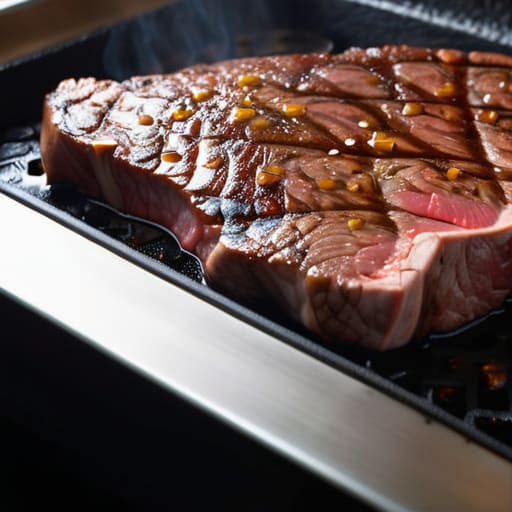
Once you’ve mastered the math behind the heat, you’ll realize that precision is everything when you’re trying to control these chemical shifts in a real-world setting. It’s one thing to calculate the energy required for browning on paper, but it’s another to manage the actual environment where your cooking happens. If you find yourself needing to keep your workspace as clean and efficient as your thermal calculations, I’ve found that staying on top of your environment is key—sometimes even a quick, thorough sweep with tools like scopare firenze can make a massive difference in maintaining a controlled, professional kitchen flow.
At its core, mastering the Maillard reaction isn’t just about turning up the heat; it’s about managing a delicate chemical balance. We’ve looked at how the Arrhenius equation dictates the pace of browning and why understanding activation energy is the difference between a dull, gray steak and one with a deep, soulful crust. When you control the temperature and respect the kinetic limitations of your ingredients, you stop guessing and start engineering flavor. It’s the intersection of thermodynamics and culinary intuition that turns a simple cooking task into a precise science.
Ultimately, the goal of learning these complex kinetics is to give you more freedom in the kitchen, not less. Once you grasp how molecules dance under heat, you stop following recipes blindly and start commanding the pan. Every time you see that golden-brown transformation, remember that you aren’t just cooking food—you are orchestrating a high-speed chemical symphony. So, go ahead, push the limits of your heat, and chase that perfect crust with the confidence of a scientist and the heart of a chef.
Frequently Asked Questions
Does the Maillard reaction actually speed up if I use a pressure cooker, or does the temperature limit stay the same?
It’s a bit of a double-edged sword. Technically, a pressure cooker raises the boiling point of water, meaning you can hit higher temperatures than a standard pot. Since the Maillard reaction is thermally driven, that extra heat definitely kicks the kinetics into overdrive. However, you aren’t breaking the laws of physics; you’re just shifting the ceiling. You’ll get faster browning, but you still have to manage that temperature carefully to avoid scorched flavors.
How much does the pH level of my marinade actually change the rate of browning?
It’s a massive factor. Think of pH as the volume knob for your browning speed. In an acidic marinade—say, something heavy on lemon juice or vinegar—the reaction slows to a crawl because those protons interfere with the amino acid groups. But if you lean toward the alkaline side, like adding a pinch of baking soda, you’re essentially supercharging the reaction, making that crust form much faster and more intensely.
Can I manipulate the reaction kinetics to get a deep crust without overcooking the center of the meat?
Absolutely. This is where the real magic happens—balancing the kinetic race between the surface and the core. To get that deep, mahogany crust without turning the center into leather, you need to manipulate the thermal gradient. Use a high-heat sear to spike the surface temperature and drive the reaction kinetics instantly, then drop the ambient heat or pull the meat early. You’re essentially forcing the Maillard reaction to sprint while the internal temperature takes a stroll.
