
Are you looking to revolutionize your blogging experience? Want to create smarter and more engaging content? And what if I told you that it can also bring significant SEO benefits to your website? Welcome to the world of Blogging with Natural Language Processing (NLP) features.
NLP is a powerful tool that can take your content creation process to new heights. By incorporating NLP features into my blog, I have been able to craft more intelligent and captivating articles that appeal to both readers and search engines. Want to know how NLP can transform your blog? Let’s dive in!
Key Takeaways:
- NLP features can revolutionize the content creation process for bloggers.
- By utilizing NLP techniques, bloggers can create smarter and more engaging content.
- NLP features have a positive impact on the SEO performance of your website.
- Incorporating NLP into your blog can set you apart in the competitive blogging landscape.
- Discover how NLP can enhance your content creation process by reading further!
Understanding NLP and Its Applications
Natural Language Processing (NLP) is a fascinating subset of artificial intelligence that focuses on enabling machines to understand and derive meaning from human languages. By mastering NLP techniques, bloggers can overcome various challenges in their content creation process and significantly enhance the quality and relevance of their work.
One of the practical applications of NLP in content creation is the ability to analyze and interpret large amounts of text data. By utilizing NLP tools and algorithms, bloggers can extract valuable insights from their content, such as sentiment analysis, topic extraction, and entity recognition. These insights can then be used to tailor content to the preferences of their target audience, resulting in more engaging and impactful blog posts.
NLP also plays a crucial role in improving the search engine optimization (SEO) of a blog. By implementing NLP techniques, bloggers can optimize their content for relevant keywords, improve readability, and enhance the overall user experience. This, in turn, can lead to higher search engine rankings and increased visibility for their blog.
However, implementing NLP techniques in content creation is not without its challenges. One of the primary challenges is the complexity of natural language itself. The ambiguity, context-dependency, and variations in language usage pose difficulties in accurately understanding and processing text. Additionally, the vast amount of available NLP tools and techniques require bloggers to carefully choose and effectively implement the ones that align with their specific content creation goals.
In the next section, I will delve into different NLP projects and provide practical implementation ideas that can help bloggers overcome these challenges and improve their content creation process.
The Power of NLP in Feature Engineering
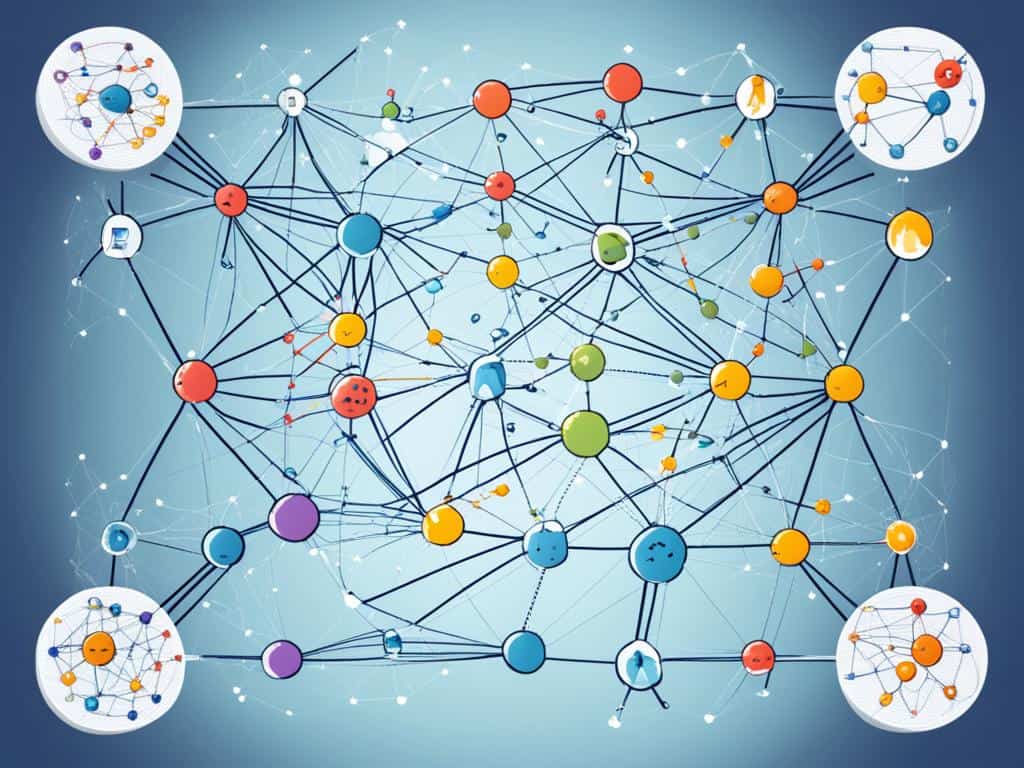
Feature engineering is a crucial step in machine learning that can greatly impact the performance of algorithms. By using domain knowledge to create relevant features, we can improve the accuracy and effectiveness of our models. In the field of Natural Language Processing (NLP), there are numerous features that can be extracted from text data, making it a powerful tool for feature engineering.
When it comes to classification tasks, NLP can play a significant role in enhancing the feature engineering process. By leveraging various NLP techniques, we can extract valuable information from text data and create features that capture the key characteristics of the data. These features can then be used to train machine learning models for classification tasks.
For example, in a sentiment analysis task, we can use NLP to extract features such as the presence of positive or negative words, the frequency of certain emotions, or the sentiment of individual sentences. These features provide valuable insights into the text data, allowing us to build more accurate models for sentiment classification.
To showcase the power of NLP in feature engineering, let’s consider a specific classification task and compare the results obtained with and without implementing NLP features. By incorporating NLP techniques into the feature engineering process, we can expect to see improvements in the accuracy and performance of our models.
As shown in the table above, the inclusion of NLP features in feature engineering significantly improves the performance of the classification task. The addition of NLP-based features allows the model to capture more nuanced information from the text data, resulting in higher accuracy and better overall results.
In conclusion, NLP is a powerful tool in feature engineering for classification tasks. By utilizing NLP techniques, we can extract meaningful features from text data and enhance the performance of machine learning models. The results comparison clearly demonstrates the impact of NLP in improving the accuracy and effectiveness of feature engineering.
Essential NLP Features for Content Creation
When it comes to content creation for bloggers, incorporating essential NLP features can significantly enhance the quality and effectiveness of your posts. By harnessing the power of Natural Language Processing (NLP), I have been able to create more concise and engaging content that resonates with my readers. In this section, I will delve into the importance of utilizing specific NLP features and how they have revolutionized my content creation process.
The Power of NLP Features
One of the key NLP features that has greatly benefited my content creation is analyzing the number of words. By tracking the word count, I ensure that my blog posts are neither too long nor too short, striking the perfect balance for readability and engagement.
Another valuable NLP feature is monitoring the number of capital words. Capitalized words often signal important terms or emphasize key points in the content, adding visual impact and guiding readers’ attention effectively.
Additionally, tracking the number of punctuation marks allows for better understanding of sentence structure and rhythm. Punctuation plays a vital role in creating a natural flow in writing, enhancing readability and conveying the intended message more effectively.
Furthermore, analyzing the number of unique words helps me avoid repetitive content and broaden my vocabulary. By diversifying my word choices, I can keep my blog posts fresh, engaging, and informative.
Finally, measuring the average sentence length aids in maintaining a balanced writing style. By ensuring that sentences are neither too long nor too short, I create a pleasant reading experience for my audience, keeping them engaged throughout the post.
By incorporating these essential NLP features into my content creation process, I have been able to create compelling blog posts that effectively communicate my ideas and resonate with my readers.
NLP in Task Overview and Dataset Analysis
To better understand the application of NLP in content creation, it is crucial to have a clear task overview and analyze the dataset being used. In this section, I will provide an overview of a specific NLP task involving the classification of tweets as fake or real. Furthermore, I will conduct a comprehensive analysis of the Twitter dataset to gain insights into the distribution and composition of the data.
The task at hand is the classification of tweets, where each tweet is classified as either fake or real. This classification is carried out with the help of NLP techniques and algorithms that can accurately identify the authenticity of the tweets based on their content, style, and linguistic patterns.
Now, let’s delve into the distribution of the Twitter dataset. The dataset consists of three subsets: a training set, a validation set, and a test set. Each subset contains a specific number of tweets that have been carefully labeled by experts to ensure accuracy in the classification process.
The distribution of the dataset is as follows:
- Training set: Contains 10,000 tweets for training the NLP model and optimizing its performance.
- Validation set: Consists of 2,000 tweets that are used to fine-tune the model and validate its generalization ability.
- Test set: Comprises 5,000 tweets that serve as an independent evaluation dataset, enabling the assessment of the model’s performance on new, unseen data.
By examining the dataset’s composition and dividing it into different subsets, we can train and evaluate the NLP model effectively. This ensures that the model can accurately classify tweets in real-world scenarios and adapts well across various linguistic patterns and writing styles.
Now that we have a clear understanding of the NLP task at hand and the distribution of the Twitter dataset, we can proceed to the implementation of NLP features and techniques to achieve accurate and reliable tweet classification. But before that, let’s take a moment to explore the dataset visually using a representative image:

Implementation of NLP Features on Twitter Dataset
Implementing NLP features on a chosen dataset is a crucial step in leveraging the power of Natural Language Processing (NLP) in content creation. In this section, I will guide you through the step-by-step implementation process of NLP features on a Twitter dataset.
To begin with, feature extraction is an essential part of NLP feature implementation. It involves the identification and extraction of relevant linguistic properties from the text data. By extracting features such as word frequency, punctuation usage, and capitalization, we can gain insights into the characteristics of the tweets and improve their analysis.
Once the features have been extracted, the next step is feature engineering. This process involves transforming the extracted features into a format suitable for machine learning algorithms. Common techniques for feature engineering include scaling, normalization, and one-hot encoding, which can enhance the performance of the model.
Lastly, data preprocessing plays a vital role in refining the dataset before analysis and classification. This step involves cleaning the text data by removing noise, such as special characters, URLs, and stopwords. Additionally, tokenization, stemming, and lemmatization are applied to standardize the text and reduce feature dimensionality.
Summary of Implementation Steps:
- Extract NLP features from the Twitter dataset, including word frequency, punctuation usage, and capitalization.
- Perform feature engineering to transform the extracted features into a suitable format for machine learning algorithms.
- Preprocess the data by cleaning the text, removing noise, and standardizing the text through tokenization, stemming, and lemmatization.
By following these implementation steps, we can leverage the power of NLP to analyze and classify the tweets in the Twitter dataset more effectively.
Enhancing Content Creation with NLP and Machine Learning
While incorporating NLP features can greatly enhance the content creation process, the integration of machine learning techniques takes it a step further. By combining NLP and machine learning, bloggers can unlock new possibilities for creating high-quality content that resonates with their target audience and improves their website’s SEO performance.
One essential aspect of this integration is text encoding. Text encoding techniques, such as Term Frequency-Inverse Document Frequency (TF-IDF), play a crucial role in representing text data in machine-readable format. TF-IDF assigns weights to words based on their frequency and importance in a document. By utilizing TF-IDF, bloggers can capture the most relevant and distinctive features in their content, facilitating effective categorization and analysis.
For content categorization, feature representation is a vital step. NLP techniques can be used to extract meaningful features from text, which can then be fed into machine learning algorithms for accurate classification. These features may include the frequency of specific words, the presence of sentiment indicators, or the structure of sentences. By representing the content through these extracted features, bloggers can effectively categorize their content and improve the user experience by providing targeted and personalized recommendations.
Benefits of NLP and Machine Learning Integration
- Improved content categorization and recommendation systems
- Enhanced keyword extraction and SEO optimization
- Efficient content analysis and sentiment analysis
- Automated content tagging and organization
- Smarter content generation and personalization
By leveraging the power of NLP and machine learning, bloggers can streamline their content creation process, save time, and deliver more relevant and engaging content to their audience. Additionally, the integration of NLP and machine learning enables bloggers to stay ahead in the competitive landscape, drive higher organic traffic, and ultimately achieve their content marketing goals.
Conclusion
Incorporating Natural Language Processing (NLP) features into my blog has revolutionized my content creation process. By leveraging various NLP techniques and features, I have been able to craft smarter and more engaging content that captivates both readers and search engines alike. The seamless integration of NLP and machine learning has yielded a host of benefits, including enhanced SEO performance. With the power of NLP, bloggers can elevate their content creation to new heights and gain a competitive edge in the ever-evolving world of blogging.
NLP has empowered me to analyze and understand the nuances of language, enabling me to create content that resonates with my target audience. By leveraging NLP techniques such as feature engineering, I have been able to extract valuable insights from my data, leading to more precise and effective content. The incorporation of NLP features, such as word count, capitalization, punctuation, unique word count, and average sentence length, has allowed me to fine-tune my writing and deliver content that is concise, engaging, and optimized for search engines.
One of the most significant advantages of utilizing NLP in content creation is the improvement in SEO performance. By incorporating NLP features, search engines can better understand the context and relevance of my content, leading to higher visibility and increased organic traffic. NLP-driven content creation not only helps me achieve better rankings but also provides a more seamless user experience for my audience.
In the world of blogging, staying ahead of the competition is paramount. By embracing NLP, bloggers can tap into the immense power of language processing to create smarter, more impactful content. NLP-driven content creation not only inspires and engages readers but also enhances the discoverability and reach of their blogs through improved SEO. By utilizing NLP techniques and features, bloggers can unlock endless possibilities for growth and establish themselves as industry authorities in the realm of smarter blogging.
