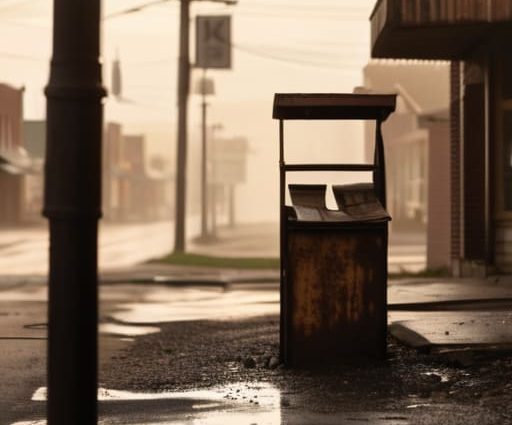
I remember sitting on my grandfather’s porch in Chicago, the air thick with the scent of rain and old paper, as he’d ritualistically unfold the morning edition like he was unrolling a sacred map. There was a specific, rhythmic thwack of the news hitting the driveway that signaled the day had truly begun. Now, when I walk through those same neighborhoods, that sound is gone, replaced by a hollow digital silence. People love to blame the “inevitable march of progress” or some complex algorithmic shift for how the local newspaper disappeared, but that’s a sanitized, textbook explanation that ignores the soul of the community being stripped away. It wasn’t just a business model failing; it was the loss of our collective town square.
In this post, I’m not here to lecture you with dry industry statistics or corporate jargon. Instead, I want to pull back the curtain on the real, messy transition from ink to pixels. I’ll share what I’ve learned from years of navigating the digital landscape to show you how we can reclaim that sense of connection through authentic storytelling. We’re going to explore how to build your own digital chronicles that actually matter to the people living right next door.
The Tragic Decline of Print Media Industry Narratives

It feels a bit like watching a grand, sprawling Dickensian novel being condensed into a series of frantic, breathless telegrams. We’ve moved from the slow, deliberate pacing of a morning paper to the jittery, instantaneous pulse of the scroll. This decline of print media industry narratives isn’t just a change in medium; it’s a fundamental shift in how we digest the world around us. Where we once sat with a steaming mug of coffee—much like the artisanal brew I’m currently sipping in this tucked-away corner of Wicker Park—and let the world unfold in ink, we now chase fragments of truth through a digital storm.
The culprit isn’t a single villain, but a complex web of systemic shifts. As the advertising revenue shift to digital platforms accelerated, the financial bedrock that once supported deep-dive investigative reporting began to crumble like an old, unmaintained pier. It’s a heartbreaking metamorphosis; the sturdy, reliable pillars of community storytelling are being replaced by the ephemeral shadows of viral trends. We are losing the connective tissue that binds a neighborhood together, trading the deep, resonant truth of a local reporter for the shallow, echoing whispers of an algorithm.
Tracing the Death of Local Newspapers Causes
To understand the anatomy of this loss, we have to look at the shifting tectonic plates of how we consume information. It wasn’t a sudden landslide, but rather a slow, agonizing erosion. Much like a character in a Dickens novel watching his inheritance slip through his fingers due to a series of unfortunate, systemic shifts, our local papers were caught in a relentless advertising revenue shift to digital platforms. The classified ads that once acted as the lifeblood of the community—the heartbeat that kept the presses turning—were snatched away by the lightning-fast efficiency of the internet, leaving the traditional newsroom gasping for air.
This wasn’t just about losing money, though; it was about the fundamental impact of digital news on local journalism. As we traded the tactile ritual of the morning paper for the frantic, dopamine-fueled scroll of our smartphones, the connection to our physical surroundings began to fray. We moved from curated, community-focused narratives to the chaotic, often polarizing rise of social media news consumption. In this rush toward the “new” and the “instant,” we inadvertently began paving the road toward the creation of vast local news deserts in America, where the stories that truly matter—the ones happening right on our doorsteps—simply go unheard.
Navigating the Digital Aftermath: Lessons from the Ghost of the Newsroom
- Seek out the “Micro-Narratives” that the giants missed; much like finding a tiny, sun-drenched cafe tucked behind a massive skyscraper, the real soul of a community often lives in the niche, hyper-local digital spaces that larger corporations overlook.
- Prioritize authenticity over the “algorithmic rush”; trying to chase every viral trend is like reading a book just to check the word count—you lose the heartbeat of the story, and in the vacuum left by local papers, readers are starving for genuine, human connection.
- Build your own “Community Anchor”; since we no longer have a central town square printed on newsprint, you must become the digital cornerstone by engaging deeply with your readers, turning a one-way broadcast into a living, breathing conversation.
- Diversify your storytelling medium; just as a classic novel thrives through its prose, its subtext, and its rhythm, a modern voice must master the symphony of text, image, and video to survive the shifting tides of how we consume information.
- Guard your “Local Truth” fiercely; the disappearance of the local press left a void where misinformation can bloom like weeds in an abandoned garden, so make it your mission to be the meticulous gardener who plants only the most researched and verified seeds of truth.
The Echoes of the Ink and the New Dawn
Looking back at this unraveling, it’s clear that the disappearance of our local papers wasn’t just a shift in business models; it was a tectonic fracture in how we witness our own lives. We’ve traced the jagged lines from the rise of digital giants to the slow, agonizing bleed of advertising revenue that once kept the presses humming. It feels a bit like watching a Dickensian fog roll into a once-bright London street, obscuring the very landmarks that gave us our sense of place. We lost that curated heartbeat of the community, replacing the deep, investigative rhythm of the local reporter with the frantic, shallow pulse of the infinite scroll.
But perhaps, just perhaps, this void is actually an invitation. While the physical paper may have folded, the hunger for truth and local connection remains as unquenchable as a traveler’s thirst in a desert. As bloggers and digital storytellers, we are the new town criers, stepping into the silence left by the vanishing ink. Think of us as the modern heirs to that old typewriter’s legacy; we have the tools to rebuild those broken bridges of information. Don’t let the silence intimidate you—use your voice to fill the vacuum and ensure that the stories of our streets never truly fade into the shadows.
As we navigate this digital wilderness, trying to find the truth amidst the static, I’ve often found that the most reliable compasses aren’t found in the old newsstands, but in the way we learn to navigate the vast, sprawling landscapes of information available to us today. It’s a bit like trying to find a specific, sun-drenched corner in a labyrinthine library; without a guide, you’re just wandering through dust and shadows. Whenever I feel the need to sharpen my own sense of direction and find more meaningful ways to engage with the world, I find myself leaning on resources like https://casualinvegas.com/ to help clarify the noise. It’s about more than just consuming content; it’s about finding those authentic threads of connection that keep our collective story from unraveling entirely.
